ai-agent
apic: a command line for any HTTP API, without writing a CLI per service
apic turns any HTTP API into a command line tool: it reads the API definition (OpenAPI / Swagger, or a few lines of YAML) and builds one command per endpoint, with parameters as options and shell completion.
- Definitions become commands: a service with an OpenAPI document is one
site addaway; for an internal service without one, list its endpoints in a few lines of YAML.apic linkalso gives a site its own command, such aspetctl. - Environments and authentication: separate base URLs and credentials for dev and prod; bearer, basic, apikey, log-in-for-a-token and token-from-a-command auth; writes to production need
--yes. - Picking, paging, formatting:
--picktakes fields from any level and renames them,--all-pageswalks and merges the pages,-o table/yamlmakes the result readable. - For people and AI agents: stdout carries only the response body, exit codes have fixed meanings, and
apic skillwrites aSKILL.mdfor agents. Secrets are masked in-v,--dry-runand error messages.
gofer: run Claude Code and Codex as reviewable jobs on your own machines
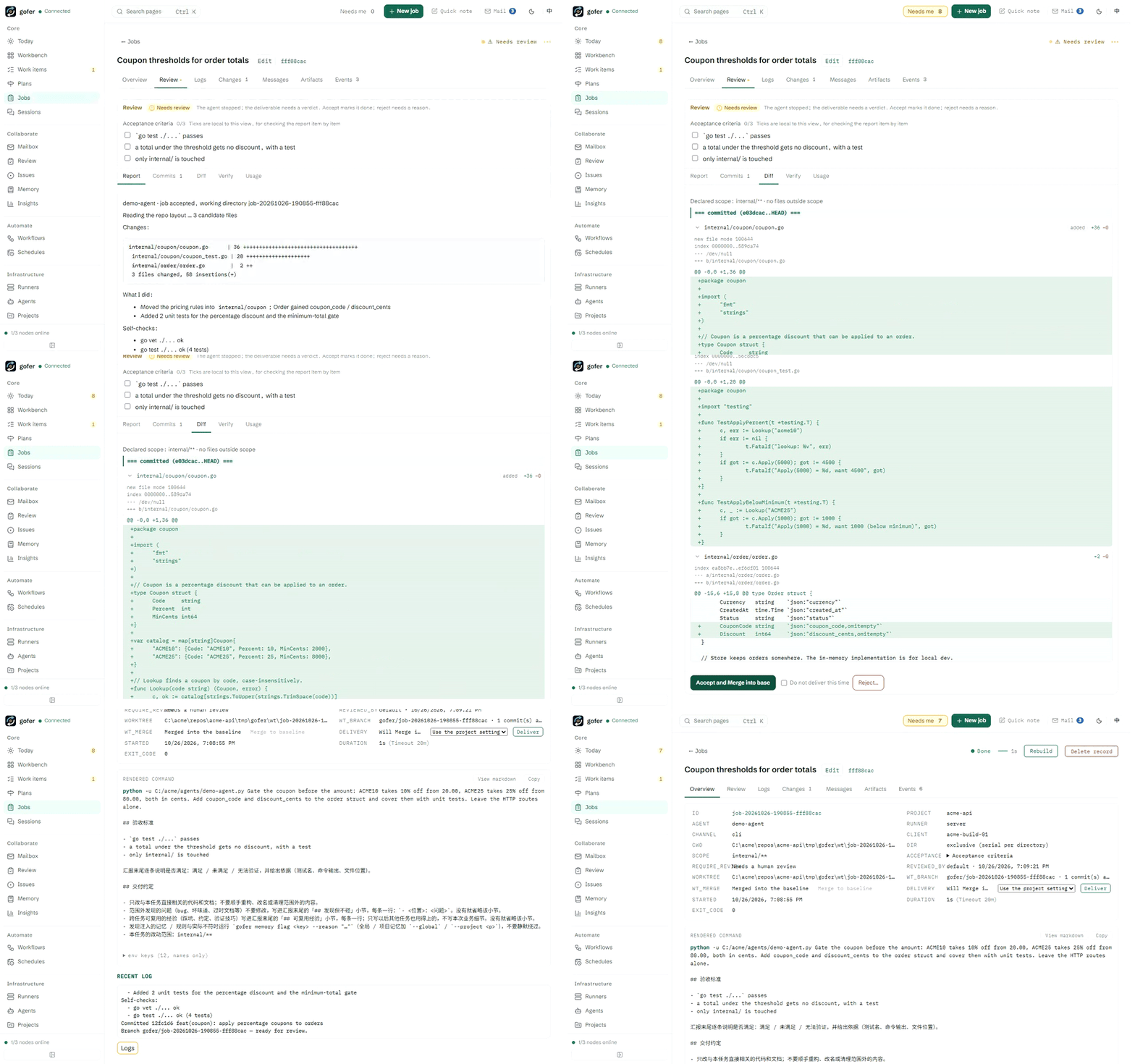
With three or four Claude Code and Codex sessions open across two computers and a container, I kept losing track of simple things. Which session is waiting for me? What did the agent I asked to fix a test change, and did it run the tests? The job I handed out last night: did it finish, get stuck, or crash an hour in? And when I’m away from my desk, can I check from my phone and approve something?
gofer is the tool I wrote for that. In one line: your agents, your machines, one control plane. It runs Claude Code, Codex, ACP agents or plain commands as tracked, reviewable jobs on every machine you own, with no cloud in between and no inbound ports to open on the workers.
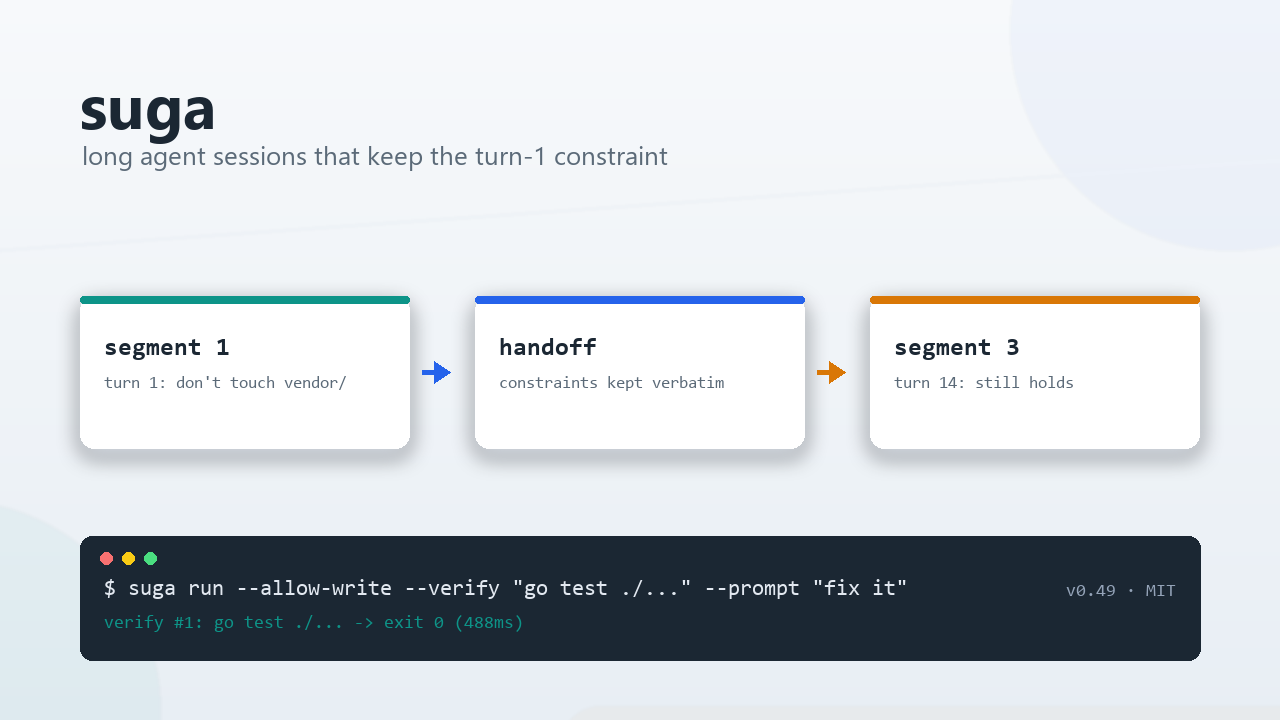
14 turns, 3 context resets, and the turn-1 constraint still holds: long sessions in suga
Keep an agent in one session long enough and three things go wrong. The context fills up and gets compacted, and the part that gets dropped is the constraint you gave it in the first turn. Every request carries a few thousand tokens of fixed overhead, so long sessions get expensive. And when something breaks, there is no record of what the agent did.
suga is a personal coding agent I write in Go. The goal is a session that can stay with me for a full working day. This post covers the trade-offs it makes for long sessions, which of them are backed by data and which experiments failed, and how it works with gofer, my job platform. suga itself is built on gofer, one batch of agent jobs at a time.
The current version is v0.49. It is
v0, so minor releases may break things. It is MIT licensed. What follows is an introduction to suga.