cli
apic: a command line for any HTTP API, without writing a CLI per service
apic turns any HTTP API into a command line tool: it reads the API definition (OpenAPI / Swagger, or a few lines of YAML) and builds one command per endpoint, with parameters as options and shell completion.
- Definitions become commands: a service with an OpenAPI document is one
site addaway; for an internal service without one, list its endpoints in a few lines of YAML.apic linkalso gives a site its own command, such aspetctl. - Environments and authentication: separate base URLs and credentials for dev and prod; bearer, basic, apikey, log-in-for-a-token and token-from-a-command auth; writes to production need
--yes. - Picking, paging, formatting:
--picktakes fields from any level and renames them,--all-pageswalks and merges the pages,-o table/yamlmakes the result readable. - For people and AI agents: stdout carries only the response body, exit codes have fixed meanings, and
apic skillwrites aSKILL.mdfor agents. Secrets are masked in-v,--dry-runand error messages.
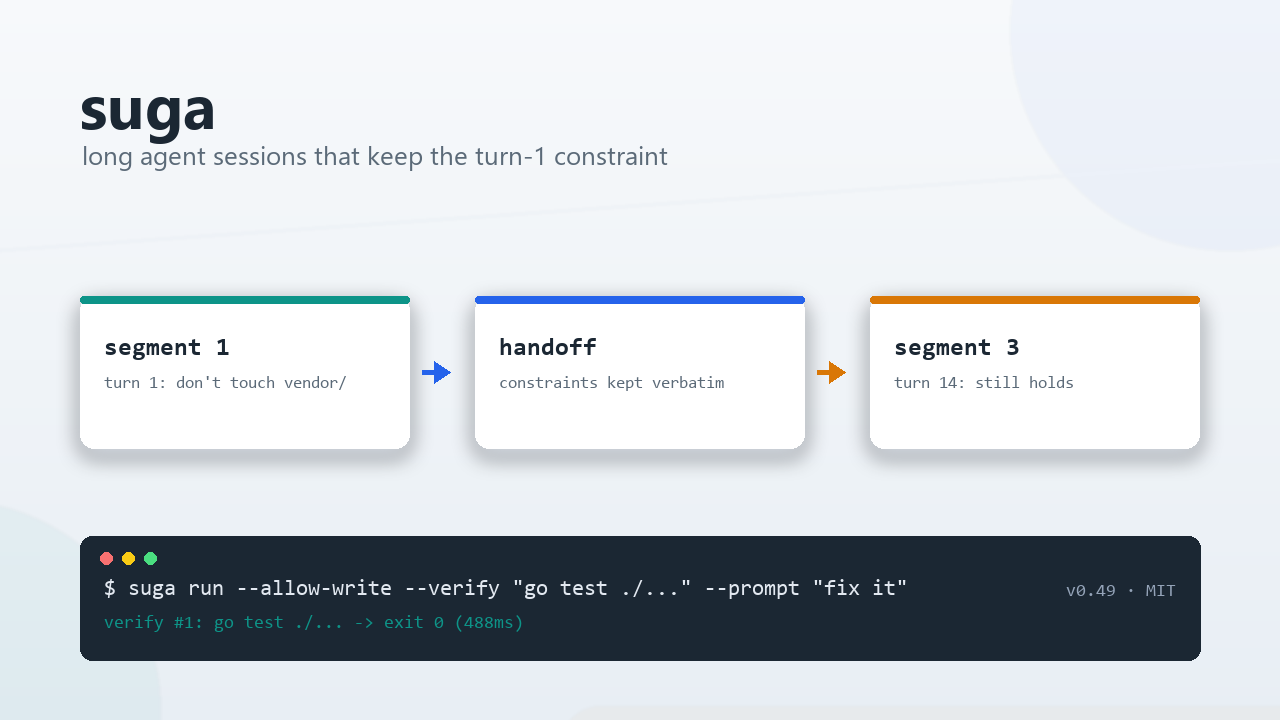
14 turns, 3 context resets, and the turn-1 constraint still holds: long sessions in suga
Keep an agent in one session long enough and three things go wrong. The context fills up and gets compacted, and the part that gets dropped is the constraint you gave it in the first turn. Every request carries a few thousand tokens of fixed overhead, so long sessions get expensive. And when something breaks, there is no record of what the agent did.
suga is a personal coding agent I write in Go. The goal is a session that can stay with me for a full working day. This post covers the trade-offs it makes for long sessions, which of them are backed by data and which experiments failed, and how it works with gofer, my job platform. suga itself is built on gofer, one batch of agent jobs at a time.
The current version is v0.49. It is
v0, so minor releases may break things. It is MIT licensed. What follows is an introduction to suga.
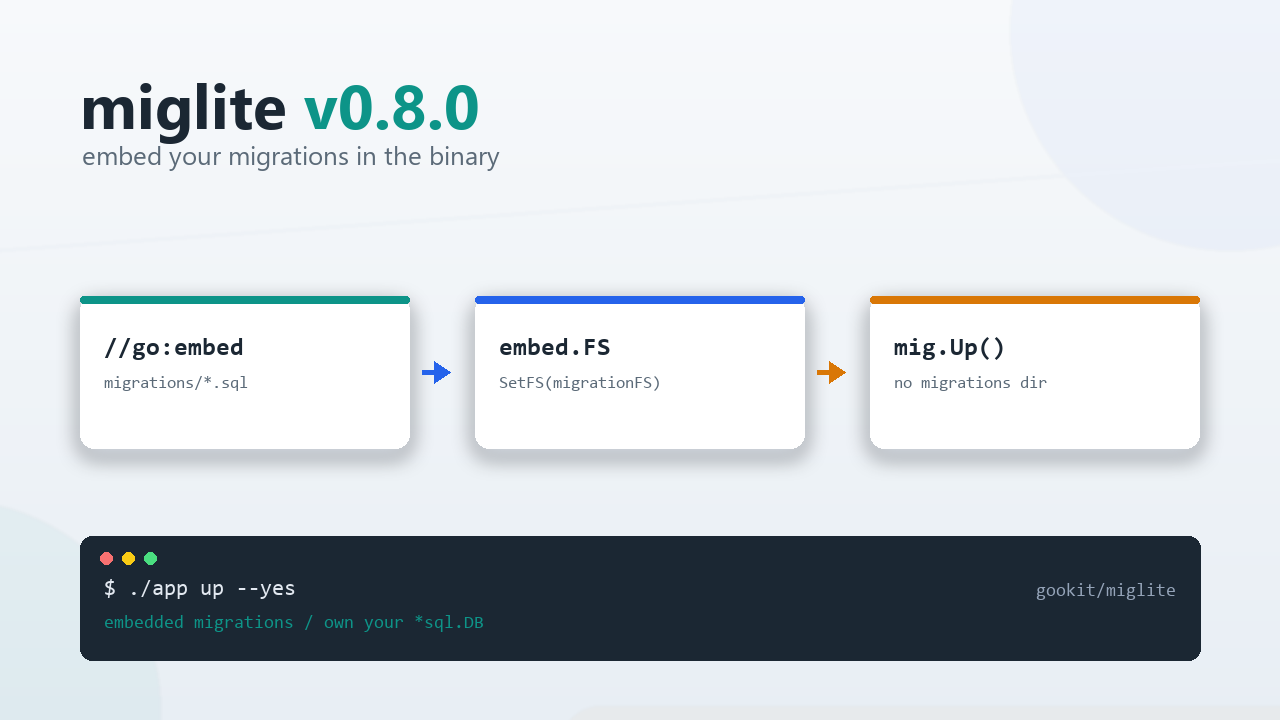
miglite v0.8.0: ship migrations inside the binary
The last post about miglite covered v0.4.0 in June. In the three months since then, it reached v0.8.0 through four releases and 69 commits (v0.4.0..v0.8.0). The main problem I wanted to solve was carrying a migrations/ directory alongside the binary. A few flags that were accepted but did nothing also needed fixing.
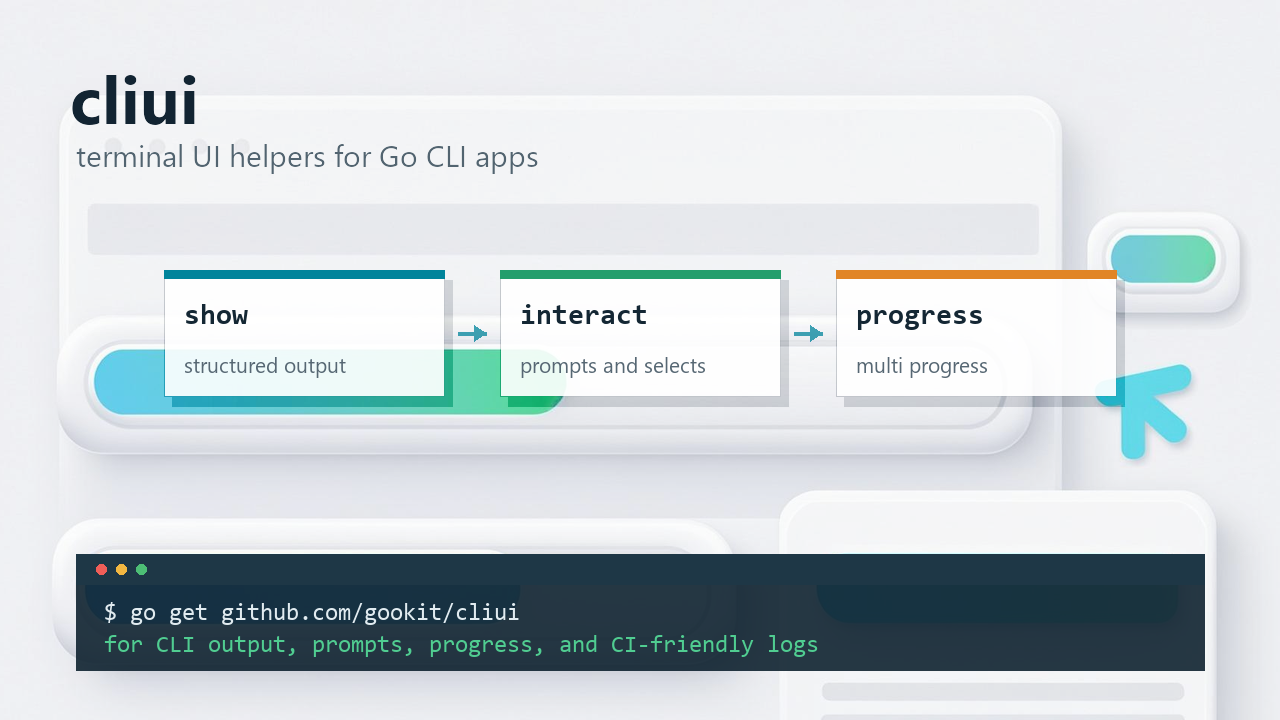
cliui: terminal UI helpers for Go CLI apps
Many CLI tools start with a parser, a few commands, and some fmt.Println calls. That works until the tool needs readable config output, clear errors, prompts, progress bars, and logs that do not break in CI.
github.com/gookit/cliui is for that middle ground: not a full-screen TUI, but more than loose terminal prints. It splits the common pieces into three packages: show for structured output, interact for prompts and selections, and progress for long-running work.
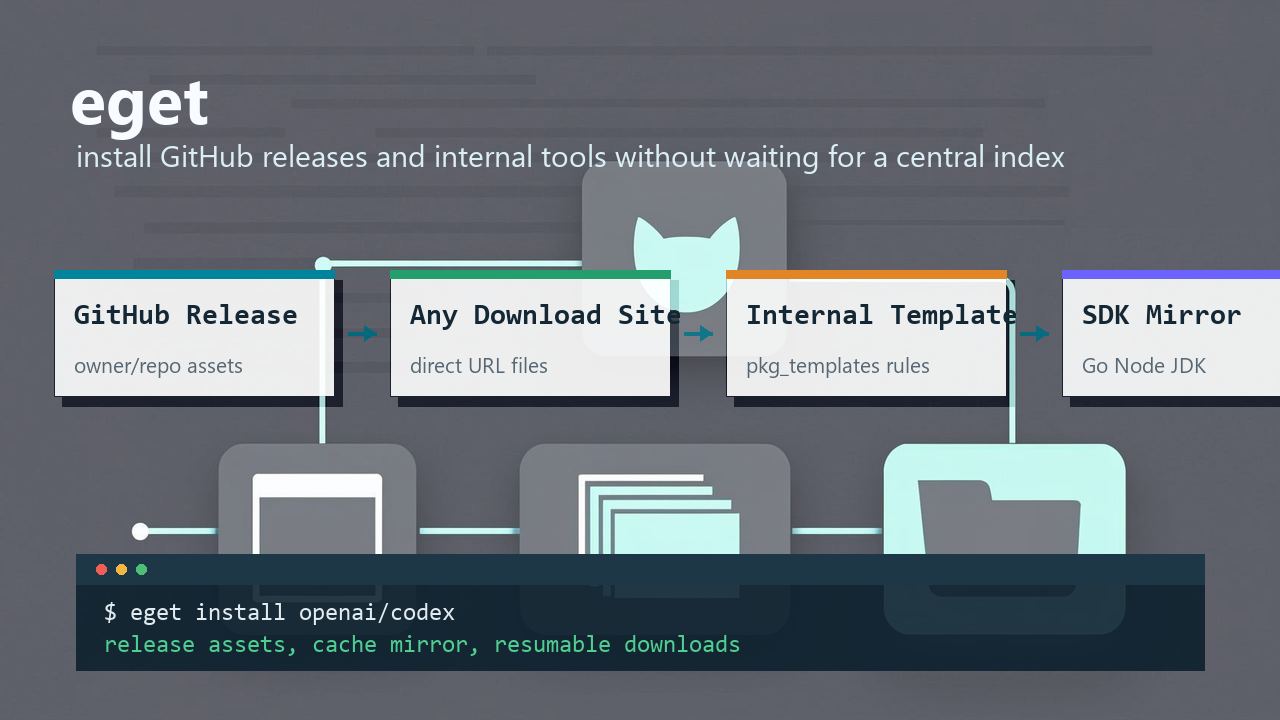
eget: install GitHub releases without waiting for a central index
The pace of command-line tooling has changed. New tools show up on GitHub every day, and active projects may publish several releases in a week, sometimes in a day.
The slow part is often not the project itself. It is the central package index in the middle: a formula, bucket, manifest, or package definition that has not caught up yet. eget is for that gap. If the release asset already exists, or the download URL can be described by a simple rule, eget can fetch and install it directly.
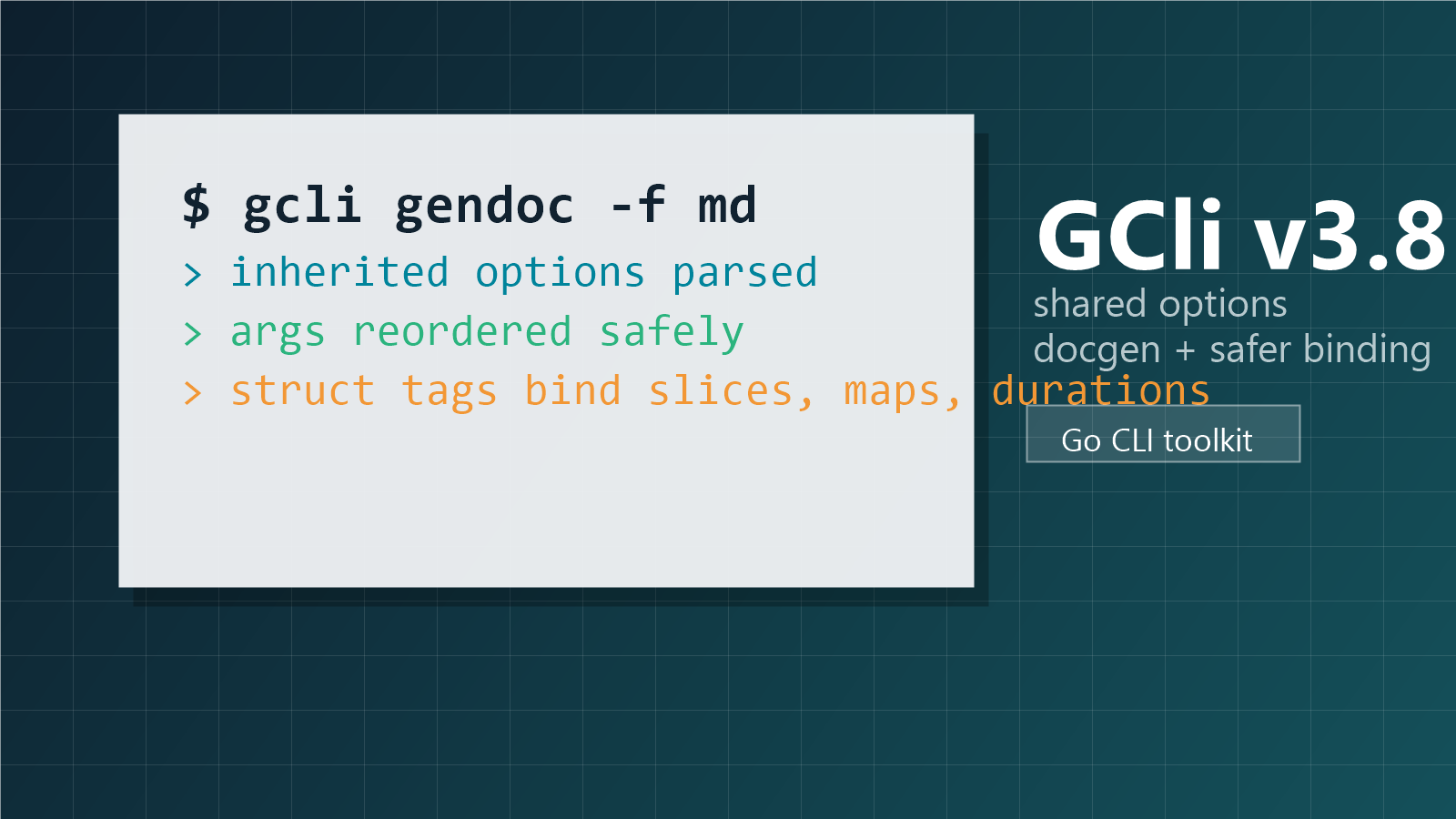
GCli v3.8: shared options, doc generation, and safer binding
GCli v3.8 is out. Since v3.5, the project has added friendlier argument parsing, richer struct binding, type-safe generic flag helpers, inherited command options, and built-in markdown/man-page generation.
If you maintain a nested CLI rather than a small command wrapper, this release is worth a closer look.
GCli v3.5 release: shell completion, command middleware, grouped help and more
GCli is a command-line application and tool library for Go. This post covers the main changes from v3.3.1 to the recently released v3.5, including the v3.4 cycle.
These updates focus on developer experience and underlying stability. If you write CLI tools in Go, a few of these features are worth upgrading for.
…cflag - wraps and extends Go flag build pertty CLI command
cflag - wraps and extends Go flag build pertty CLI command